
Content creation: one battle after another
Reflections on content creation inspired by a recent movie

I wanted to write a slightly different post today, more of a personal reflection than my usual analysis (don’t worry, I will be back to that soon 🙂), to draw a parallel between a recent movie I have watched (don’t worry, no spoilers ahead) and content creation in film and beyond.
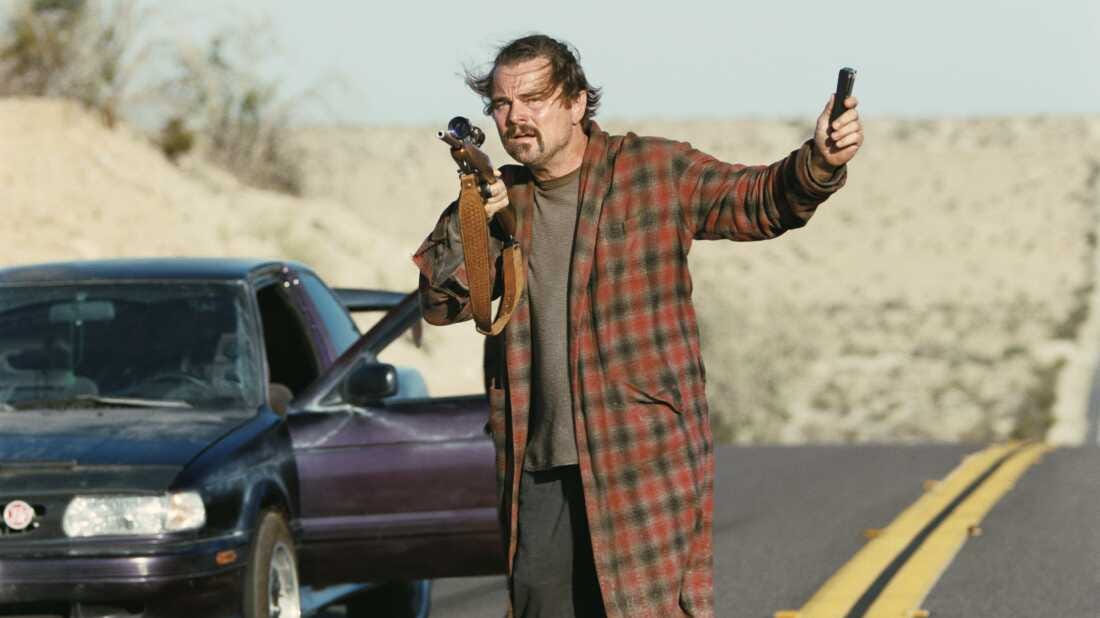
A few weeks ago, I went to the cinema to watch One Battle After Another, the new Paul Thomas Anderson movie. He is an incredibly talented director, and I had heard good things about the film, so my expectations were very high.
I loved the movie.
Walking out of the theatre, I thought that what I had just seen was new and bold: it pushed cinematic boundaries forward. It is difficult to explain why I thought this movie was special, but it prompted me to research some facts about the film, which, in turn, led me to reflect on the state of content creation more broadly.
As usual, if you have any feedback about Sense the Frame, feel free to send me a message:
I hope you enjoy my analysis. If you found it valuable, please consider sharing this article on your social media platforms. It helps spread the word and supports the time and effort I put into creating this newsletter. And if you haven’t already, I would love for you to subscribe so you don’t miss future editions.
📊💡🚀 Want a Newsletter tailored to your business?
Some of you have asked whether I can make this newsletter specific to your organization or create a completely new, customized newsletter for your team. The answer is yes.
Imagine a relevant intelligence feed curated specifically for your business. No generic AI slop, just actionable insight and analysis that your employees (or clients) can use to make smarter decisions.
If you want a newsletter built for your organization and your team’s needs, or if you are curious about my services, get in touch.
Prologue: cultural vs. commercial success
Let’s start from the basics. This is what I found out about the movie and, particularly, its critical and commercial reception:
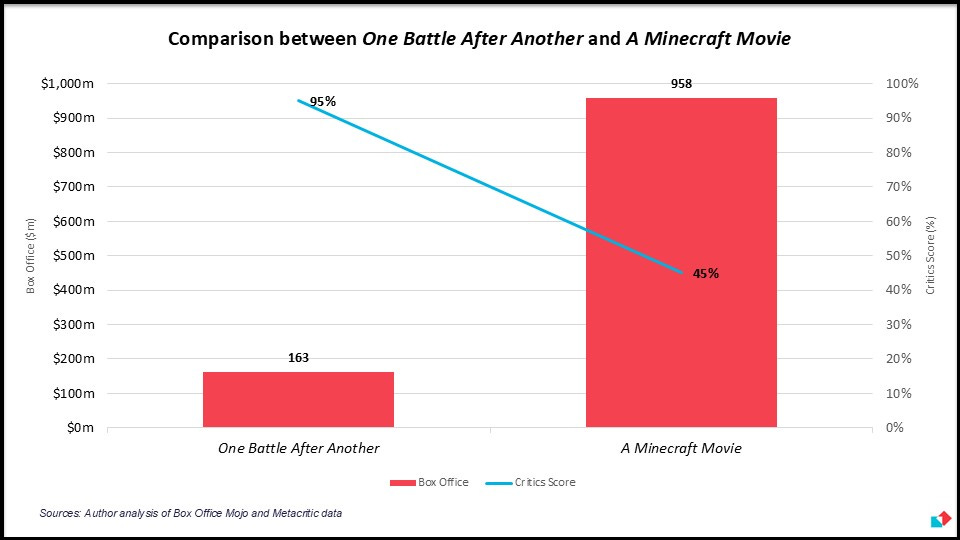
One Battle After Another attracted critical acclaim. Most movie critics loved it as reflected by its very high score on platforms such as Metacritic and Rotten Tomatoes, as well as by the many 5-star reviews it garnered. There doesn’t seem to be any disagreement among critics, with most of them already labelling it as a masterpiece (despite its recency).
The movie did not just wow movie critics. Its Letterboxd score (Letterboxd is a social platform for film lovers) is one of the highest I have ever seen on the platform. This means that also cinephiles loved the movie.
Anecdotal feedback from friends that watched the movie (and the overwhelming applause it received at the end of the screening I attended) made me realize that its appeal may go beyond cinephiles (this was confirmed by some scores I checked around the internet). This may have been favoured by the movie’s characteristics, including its high rhythm, comedic tone and action sequences.
Despite its critical success, the movie is very likely to lose (a lot of) money. According to Vulture, its budget was between $130m and $160m, which is very high. At the time of the writing, revenues had just reached $163m, which makes the movie almost certainly a box office flop.
Based on the above, I wondered: Is this a successful movie?
It depends on the definition of success (and who you ask). Investment in this movie has not paid off, not monetarily, at least. However, people seem to have really liked the movie and its status among critics and audiences alike might mean the film has a legacy to leave in the long-term (this may partially compensate for the financial loss it has incurred via other revenue sources). In this sense, the movie could be considered a hit from a cultural perspective.
The pursuit of balance
This tension between quality and financial return, safety and innovation, as well as short and long-term success, is not new in the cinema industry, and, more widely, in content creation. What is new is that we now have technologies enabling us to create and distribute content at a fraction of the cost, and with a better knowledge of what might become “viral” with audiences. It is up to creators to manage these variables (as much as they can) to find a balance between (often) competing forces.
AI, for example, can automate routine tasks and free up time for purely creative work, or even generate creative output itself (the broader impact of AI on creativity is a discussion for another day). Social platforms provide trend data that helps anticipate what might resonate with audiences.
The risk lies in pushing these tools to the extreme, using them to produce content as cheaply and algorithmically as possible. Efficiency and audience appeal are valuable, but not if they come at the expense of authentic creative expression that pushes us forward.
Unfortunately, we are already seeing the combined negative impact of AI and social media on content, from films trying to hit a formulaic sweet spot to social posts designed primarily to please algorithms. With the arrival of platforms like Sora 2 and Vibes, this trend may only intensify, leading to even more ultra-processed content optimized only for engagement metrics. That is perhaps why it felt refreshing to go to the cinema and experience something that escaped these mechanisms.
While One Battle After Another is certainly not an example of producing content at a fraction of the cost (Leonardo DiCaprio’s reported $25m salary didn’t help!), its creator tried to make the movie as appealing as possible (through high rhythm, comedic tone and action sequences, for example), while still producing something deeply innovative that feels authentic. Whether this is successful or not, it’s not the point, in my opinion. What matters, for me, is the pursuit of balance itself.
Creativity beyond cinema
The tension I have described so far is magnified in the film industry, but if you think about it, it extends well beyond cinema. Today, we are all creators in one way or another, navigating the competing demands of quality and reach as well as durability and immediacy. Technology (and particularly AI, as I mentioned earlier) is only intensifying the challenge of maintaining this delicate balance.
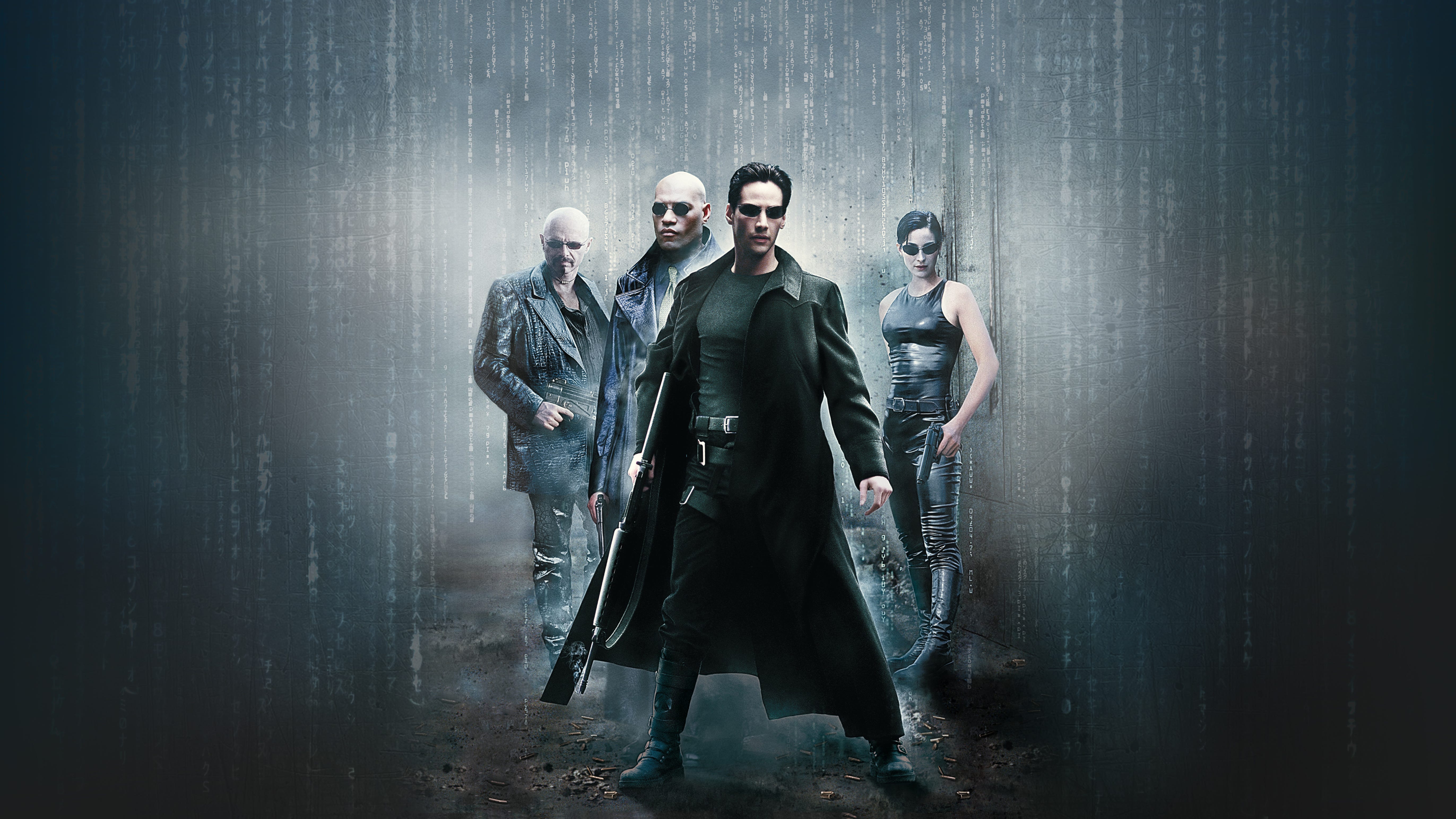
Many more creative works I am seeing today seem to be optimized primarily for reach and immediacy. And this is rapidly flooding the web as more people and organizations, driven by fear of missing out, join the AI slop rush. While I might occasionally open these pieces of content to check them out (unintentionally inflating some engagement metrics), they rarely hold my interest.
And we are all approaching a breaking point: I think that this trend is connected to a broader decline in engagement across social media platforms since 2022 (coincidentally, the year ChatGPT was released), as reported in this Financial Times article (requires subscription):
“It has gone largely unnoticed that time spent on social media peaked in 2022 and has since gone into steady decline”
I believe this conjuncture is creating an opportunity for a countermovement that prioritizes quality and durability (like One Battle After Another), breaking through the white noise of AI slop, and creating work that humans (and not AI agents) actually want to read or watch. The kind of content that deeply engages audiences and moves us forward. In my opinion, those who recognize this shift early will likely benefit from being ahead of the curve. I certainly hope so.
My approach to creating this newsletter
When I write this newsletter, I aim to be authentic (which is one of the reasons why I chose this topic, by the way). I also try to prioritize quality over quantity, aiming to create something that lasts longer than a fleeting social media post or a clickbait headline. That means conducting original analyses on topics I feel are not covered enough, as well as curating content that I think provides value to readers.
And these principles have driven the tools I use to create and distribute content. In creation, this means using AI not to generate content from scratch, but to improve it. In distribution, hosting the newsletter on Substack is ideal for long-form content and provides a lasting archive of articles that readers can revisit, which is aligned with the purpose of my work.
However, I cannot fully escape the mechanisms of our time. I also need to consider what might resonate with audiences, and how I can capture their attention in increasingly crowded feeds. This involves activities ranging from monitoring social media conversations to creating additional content and actively sharing it across different platforms, with the objective of encouraging readers to engage with the content I am creating. Sometimes it works, sometimes it doesn’t.
Again, it is a delicate balance we strive to manage in our creative efforts.
💬 By the way, this reminds me to ask whether you like my newsletter…
Feel free to reach out to me with comments and suggestions :)
Epilogue: the art of balance
Let’s come back to cinema for a moment. Interestingly, many recent films, from Megalopolis to The Brutalist, place architects at their centre. This is no coincidence, in my opinion. The architect is perhaps the ultimate artist of balance: constantly negotiating between beauty and function, permanence and change. In many ways, that is what (some) modern creators are trying to do. They are trying to build something meaningful that stands in a world that moves too fast. More often than not, this is not a single stroke of genius but a process of continual refinement.
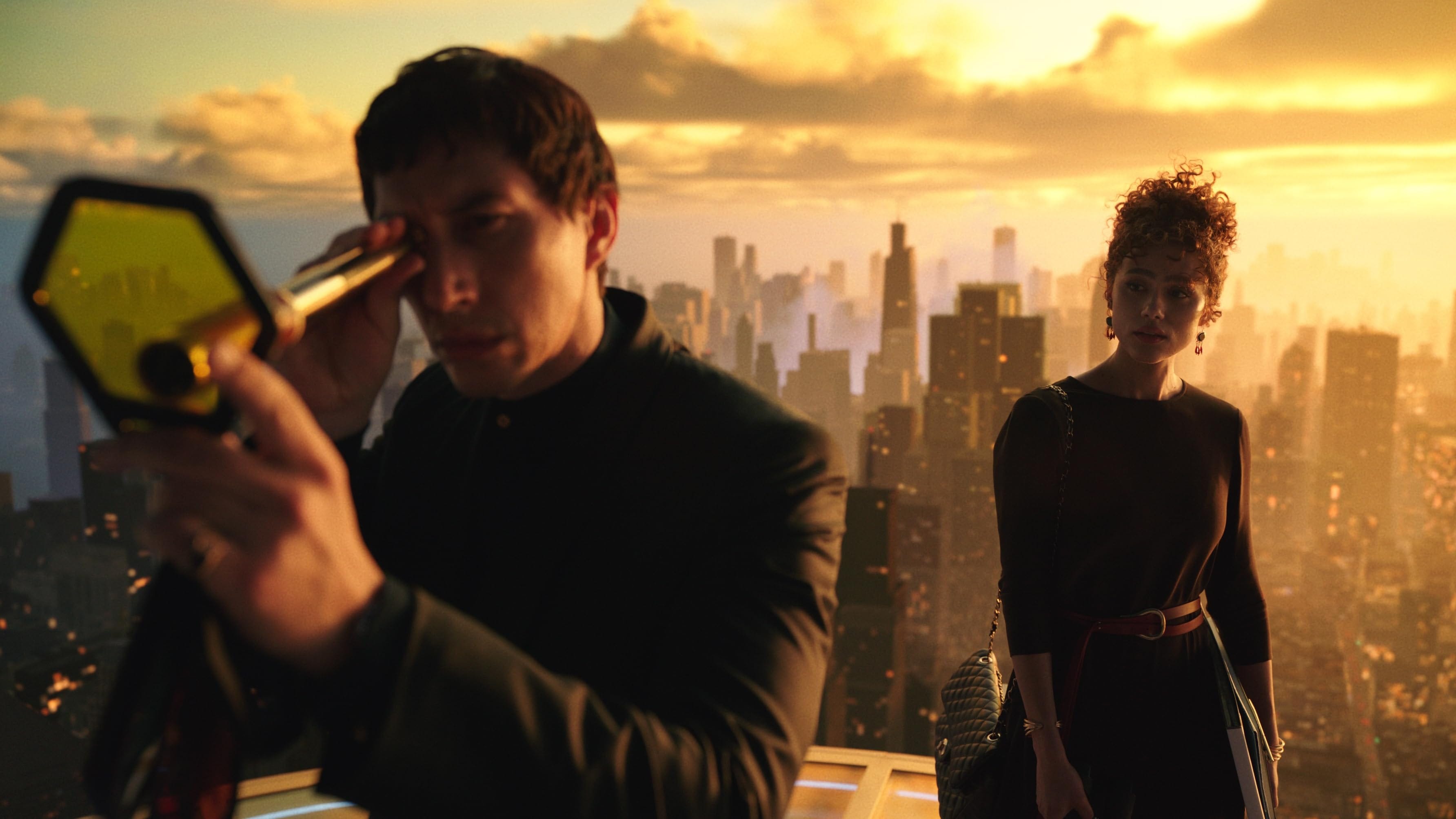
And this brings us back to the title of the movie that inspired my reflections. Content creation today, whether you are crafting a post, article, video or film, is one battle after another. We may not win every time, but every attempt is an opportunity to learn, adjust, and perhaps, eventually, succeed.
That’s all for this edition of Sense the Frame.
P.S. In case you missed it, here’s the trailer for One Battle After Another:
I hope you enjoyed my analysis. If you found it valuable, please consider sharing this article on your social media platforms. It helps spread the word and supports the time and effort I put into creating this newsletter. And if you haven’t already, I would love for you to subscribe so you don’t miss future editions.
💬 Join the Conversation
I’d love to hear your thoughts on these insights. Did something stand out? Do you have a different perspective? Leave a comment on this post and let’s keep the discussion going.
About me
I help clients turn research and data into impact.
My work spans three key areas:
Research & Insight: Market and user research studies that anticipate shifts and uncover customer needs.
Data & Analytics: Advanced data and analytics solutions that turn information into actionable insight.
Content Creation: Reports, articles, and event content that transform insights into compelling and memorable experiences.
If you’re looking for research, content, or data analytics support, or simply want to say hello, feel free to reach out.
Wow, the new and bold cinema really resonated, kinda like your usual posts always debug my own thoughts on creative bounderies.